
Concrete Driveways and Flatwork
A driveway is the hardest-working piece of concrete on most properties. It carries two tons of vehicle several times a day, sits in full sun, takes every thunderstorm head on and gets no shelter in a January freeze. When one fails early around Greenwood, the cause is almost never the concrete itself. It is the ground it was poured on.
We pour driveways, patios, garage and shop slabs, sidewalks and walkways for homes and businesses. This page covers how we build them and what makes one outlast another.
Driveways
Most driveway calls fall into one of three groups. The first is a new home where the builder left a gravel drive or nothing at all. The second is an older house whose original driveway is cracked into sections, sunken at the garage or too narrow for the vehicles that use it now. The third is a gravel drive the owner is tired of raking back into place after every hard rain.
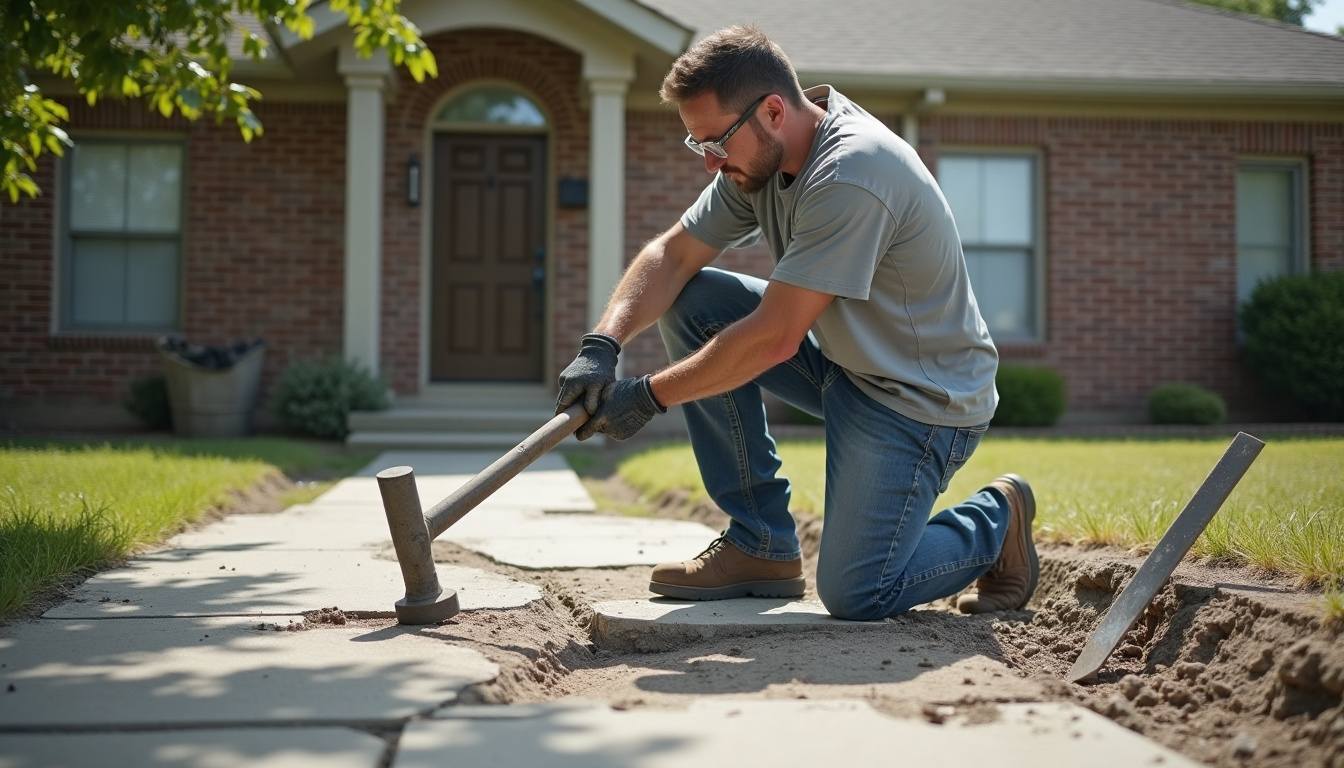
For a replacement, the old slab has to come out before anything else happens, and we handle tearing out the old slab first as part of the same job. People often ask who repairs concrete driveways here. Our honest answer is that we replace rather than patch. Once a slab has cracked through and settled, the problem is underneath it, and a surface patch does not change what the clay is doing.
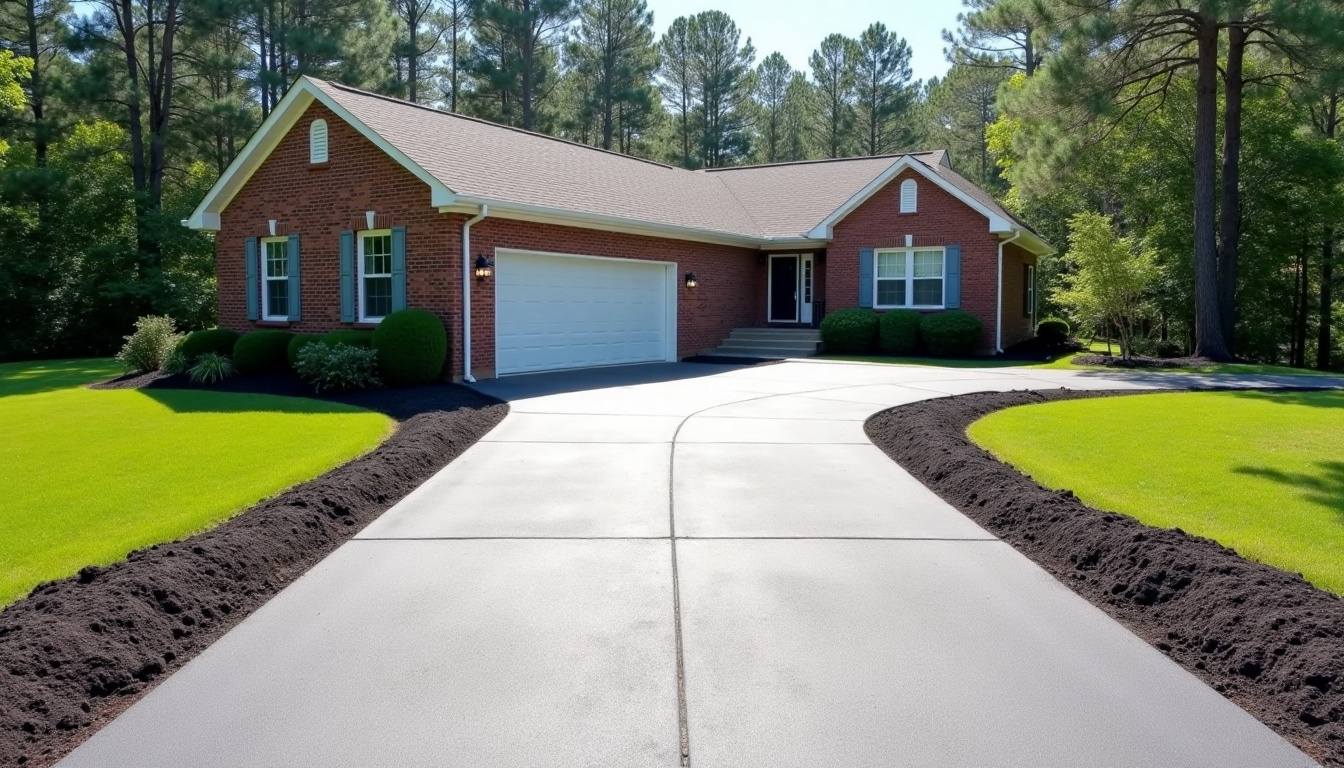
A new driveway is laid out with you on site. We talk through width, where it widens for parking or a turnaround, how it meets the street and the garage floor, and which way the water runs. Thickness and reinforcement are set by what will drive on it. A driveway that only sees cars is one thing. One that carries a loaded work truck, a boat trailer or a delivery truck needs more under it and more in it, and it is far cheaper to decide that before the pour than after.
Patios, slabs and walks
Patios are where most of the layout questions come up: how big, what shape, how far off the back door, and whether a step is needed down to the yard. We set the slab so water runs away from the house and so the finished height works with your door threshold.
Slabs cover garage floors, shop and outbuilding pads, equipment pads, dumpster pads and anything else that needs a flat, strong surface. Tell us what will sit or drive on it and we size the slab for that load.
Sidewalks and walkways are smaller pours, but they get the same base and the same joints. A front walk is also the place many owners choose to step up from a plain broom finish to a stamped pattern or color, since it is the first thing a visitor walks on.
Base prep on red clay
Red Piedmont clay swells when it is wet and shrinks when it dries out. A slab poured directly on it moves with every wet spring and dry August, and it cracks and settles faster here than the same slab would on sandy ground. The fix is not exotic. It is a layer of crushed stone, placed over clay that has been cut to grade and compacted, then compacted again. The stone spreads the load, gives water a path out from under the slab and puts a stable layer between the concrete and the soil that moves.
Soft spots get dug out and filled with stone instead of being bridged over. Topsoil and roots come out completely, because anything organic left under a slab rots and leaves a void.
Drainage is settled at this stage too. With around 47 inches of rain a year, much of it in heavy summer storms, every slab needs a clear slope to somewhere that can take the water. If the only place for it to go is toward the house or into a low corner of the yard, we say so before the forms go in and talk about a drain.
How a pour runs
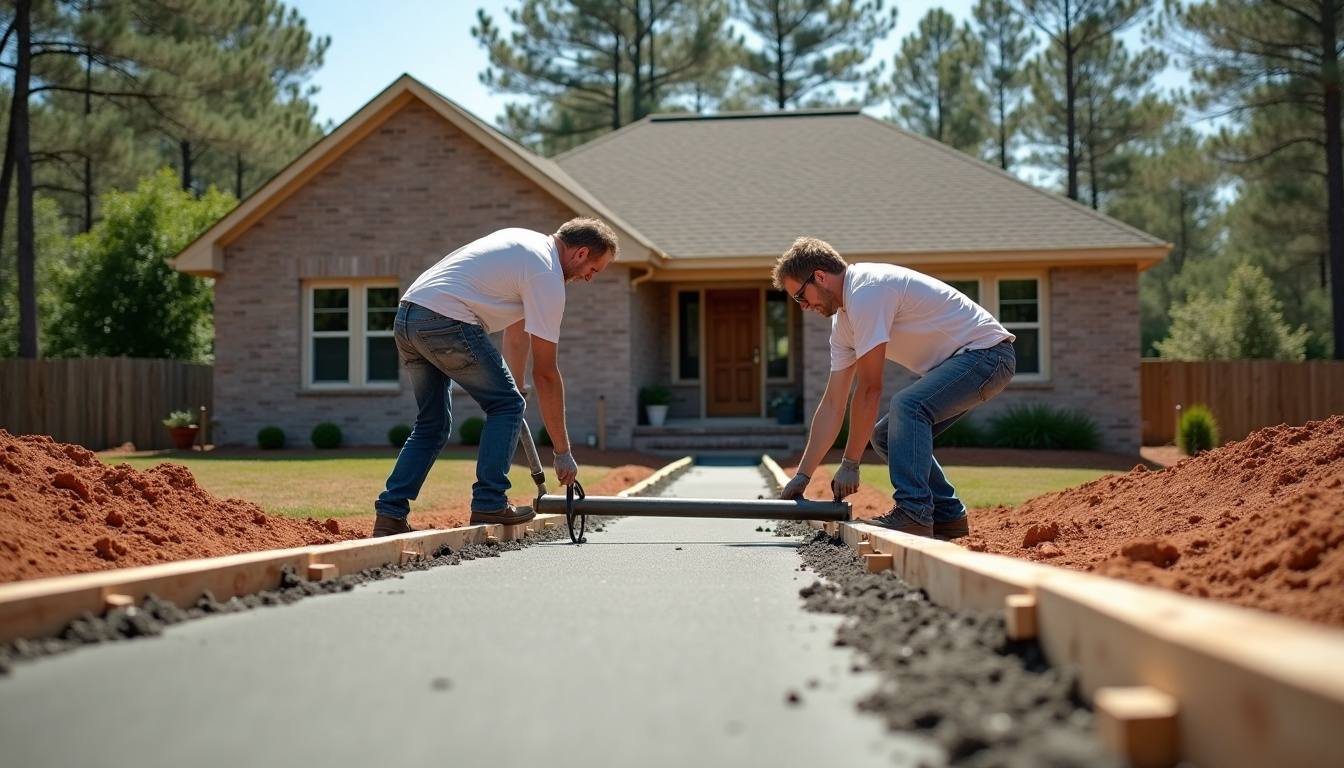
Forms are set to the lines and slope agreed at layout and staked so they cannot bow when the concrete loads them. Reinforcement goes in where the job calls for it. For outdoor flatwork we order an air-entrained mix. The tiny air bubbles give freezing water room to expand, which is what keeps the surface from flaking after the freeze and thaw nights we get each winter.
In summer we pour early. With highs in the 90s, concrete delivered at midday sets faster than a crew can finish it well, and a rushed finish shows up later as surface cracks. An early start gives time to strike off, float, edge and broom the surface properly. We do not add water to the truck to buy time, because extra water makes weaker concrete.
Control joints are tooled or cut at planned spacing so the slab cracks along straight lines inside the joints instead of wandering across the middle. Then the slab is cured so it holds its moisture while it gains strength. We leave you clear guidance on when you can walk on it and when you can park on it.
Residential and commercial
For homeowners the work is mostly driveways, patios, garage slabs and walks, on everything from in-town lots in Greenwood to rural properties out toward Ninety Six. For businesses, property managers and builders we pour parking pads, aprons, loading areas, dumpster pads, shop floors and sidewalks. Commercial pours are scheduled around your operating hours and deliveries where we can, and a walk or entrance can be done in sections so customers still have a way in.
The company is licensed and insured, which matters to a commercial owner's paperwork and should matter to a homeowner just as much.
What sets the cost
Square footage is the biggest factor, followed by thickness and reinforcement. After that it comes down to the site: whether old concrete has to be broken out and hauled off, how much grading and stone the base needs, whether a concrete truck can reach the forms or the concrete has to be moved by buggy or pump, and how much hand forming the shape takes. Curves, steps and thickened edges add labor. A decorative finish adds more.
No two driveways sit on the same ground, so we do not quote flatwork by guesswork. Every job is priced after someone has walked the ground and measured it, with the price in writing before a truck is ordered. That written quote spells out the size, the base, the mix, the finish and whether removal and haul-off are included, so two quotes can be compared line for line.
Related
Stamped and Colored Concrete
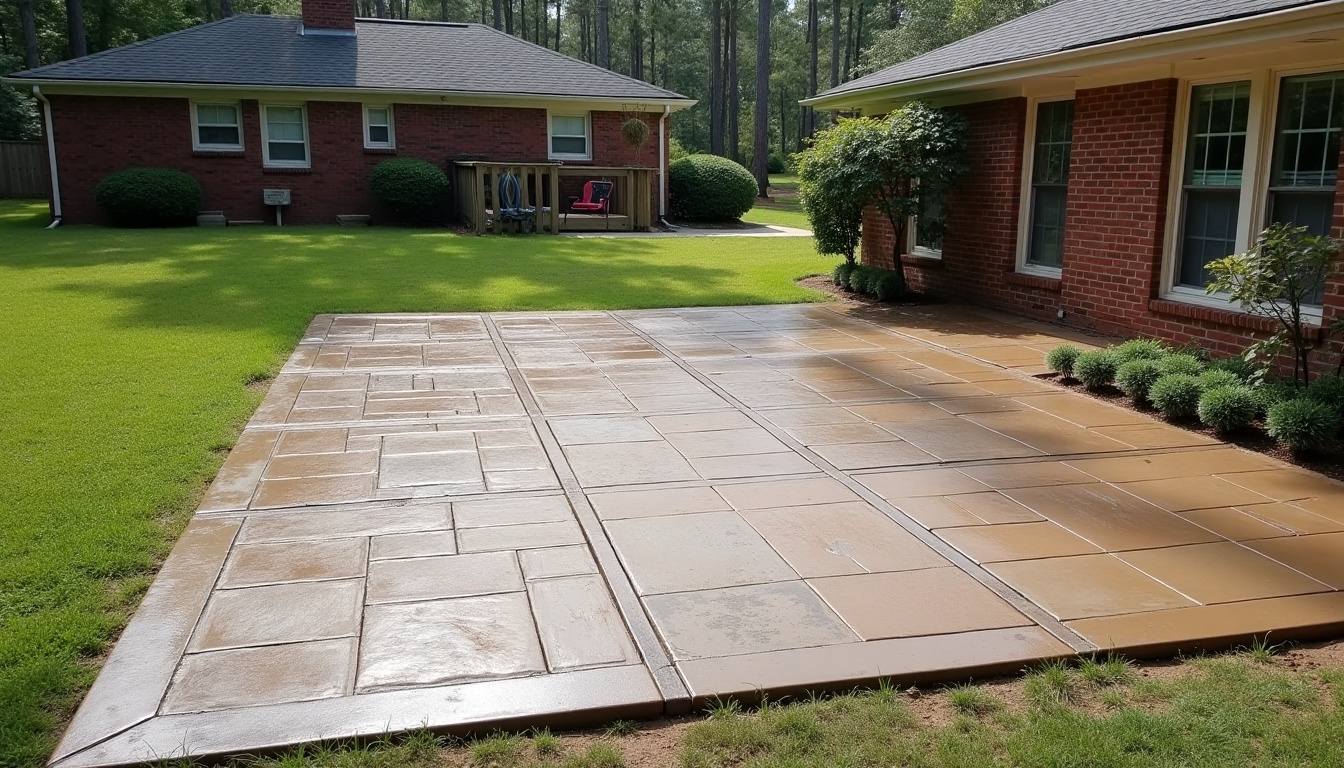
Stone, slate and brick patterns, sealed to hold color in Southern sun.
Demolition and Concrete Removal
The site is left graded and ready for whatever comes next.
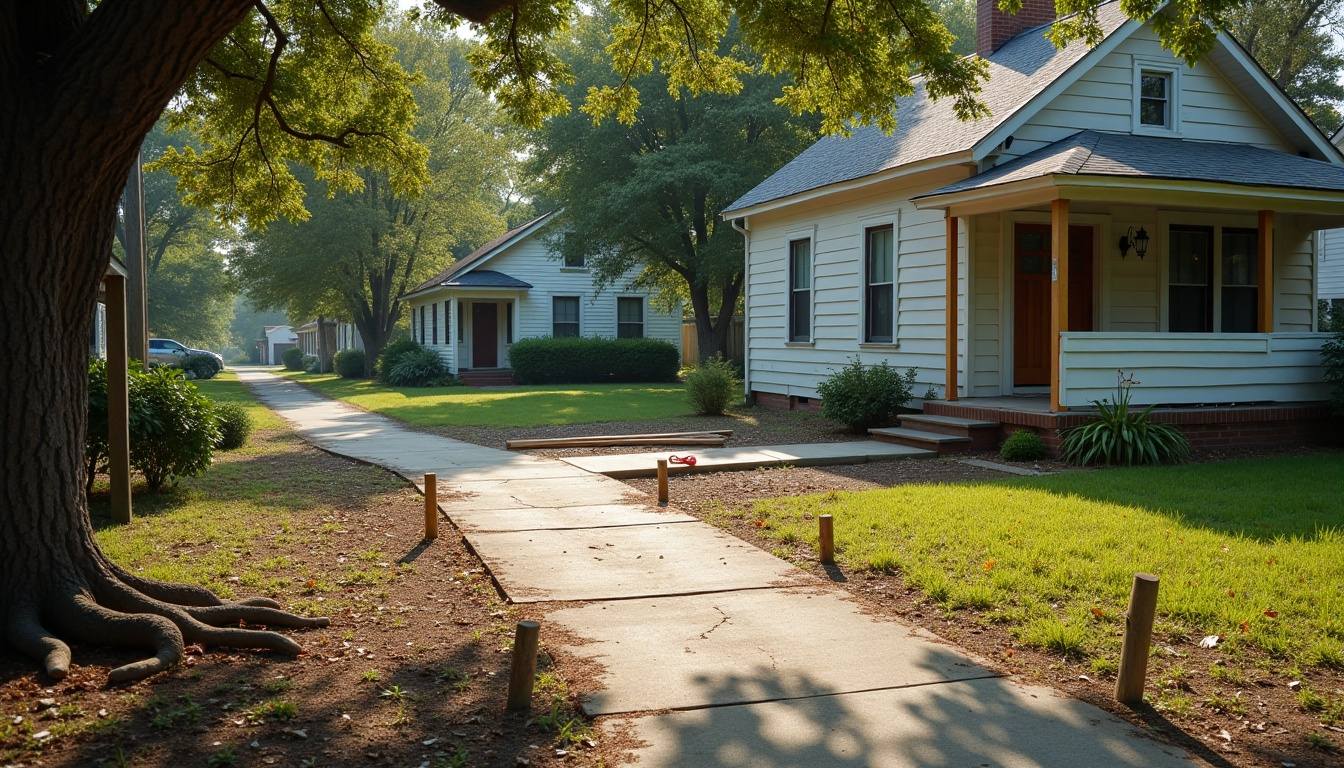
Concrete Work Across Greenwood
Licensed, insured Greenwood concrete crew with free written quotes.
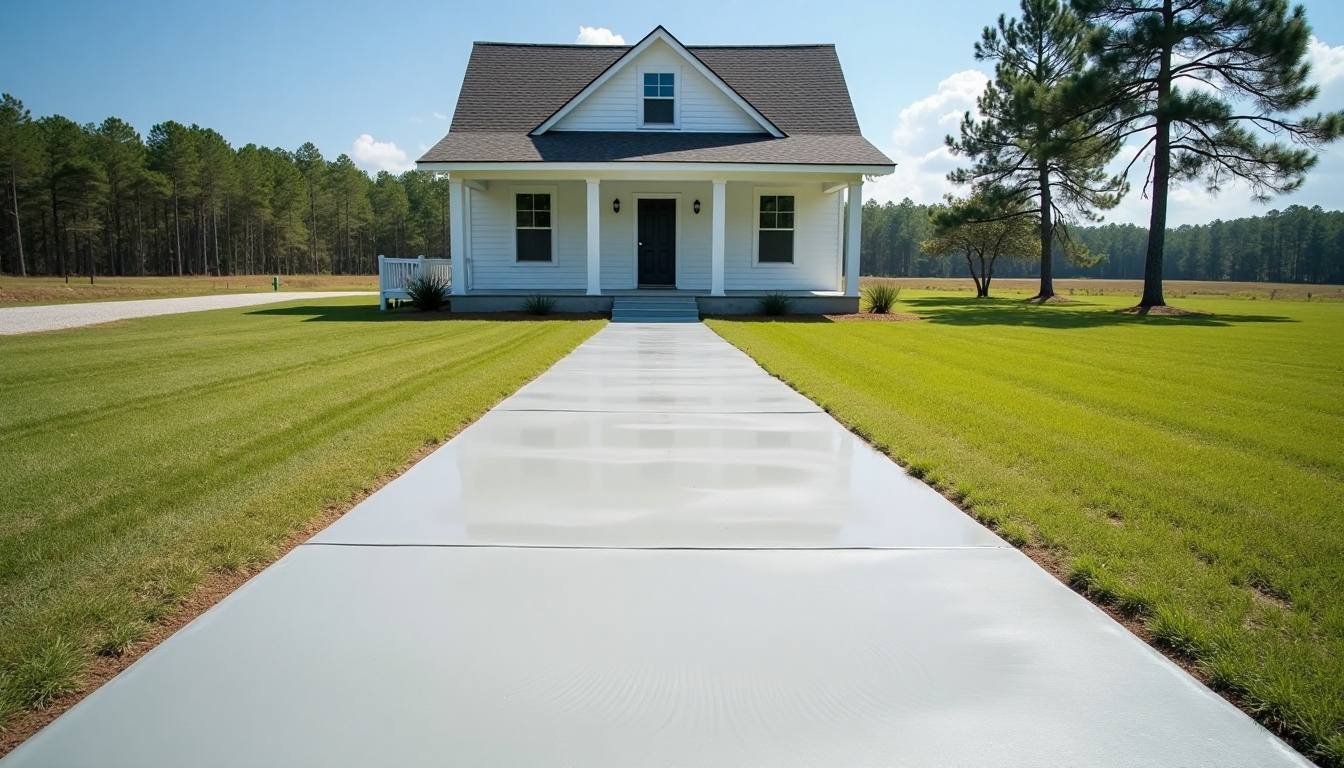
Driveways and Slabs in Ninety Six
Concrete and site work for town lots and farms near Ninety Six.
Get a driveway or slab measured
Send the quote form with your name and phone number. In the message box, type what you want poured, the rough length and width if you know them, what is on that spot today and what will be driving or sitting on the finished slab. We will set a time to walk it with you and follow up with a free written quote.
Open 24 hours. Call any time or send the form.